Exploring the Ancient World: Classics Trip to Rome
Over October half term, forty Wilson’s students gathered at Heathrow Airport, ready to embark on an exciting four-day visit to Rome. The trip offered a wonderful opportunity to explore some of the most significant sites of the ancient world, bringing our classroom studies to life through first-hand experience.
Our first stop was the iconic Spanish Steps, followed by a visit to the Ara Pacis (Altar of Peace). Here, we had the opportunity to examine this remarkable monument and consider its significance within the history of Ancient Rome, particularly its association with the reign of Emperor Augustus and the establishment of the Pax Romana.
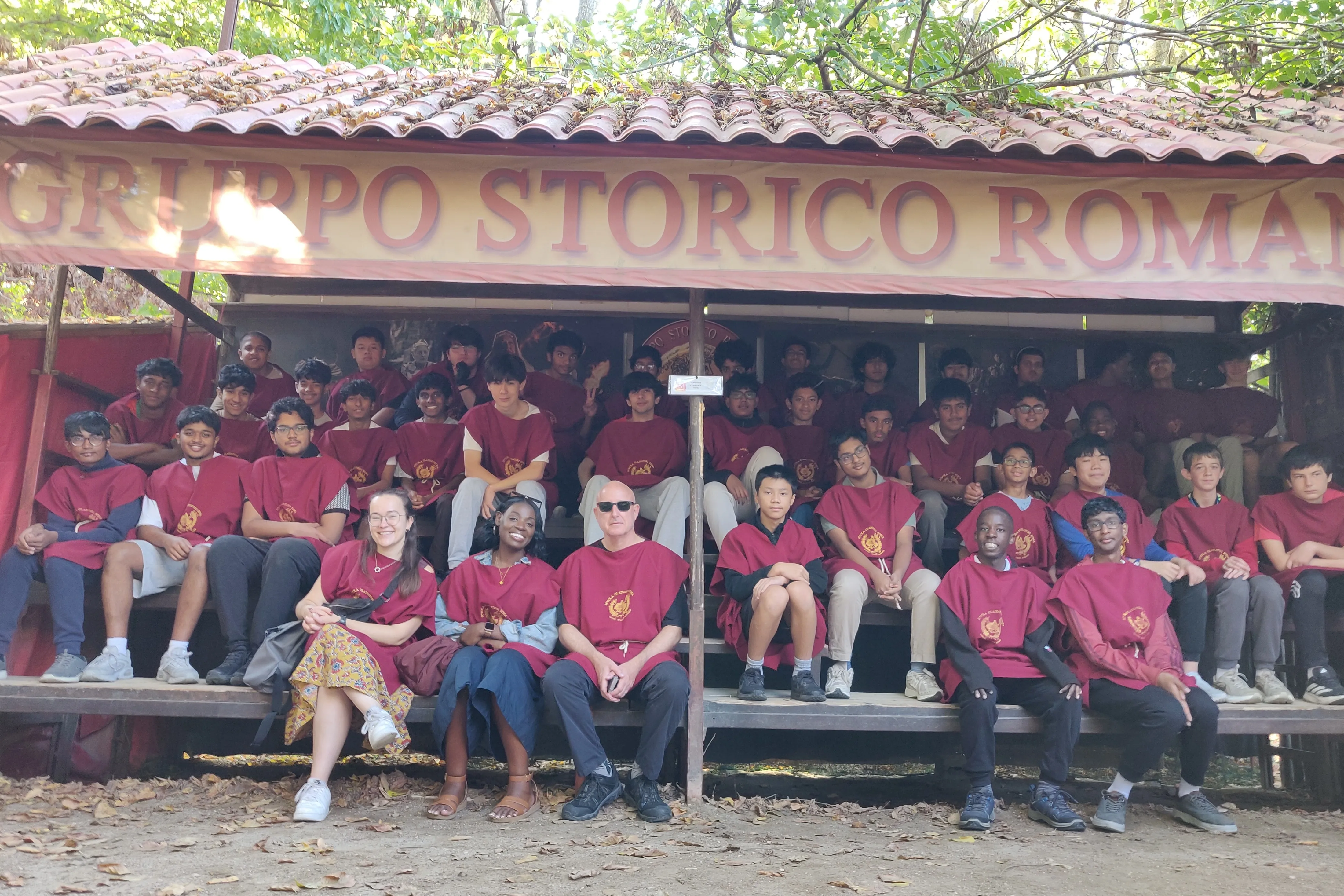
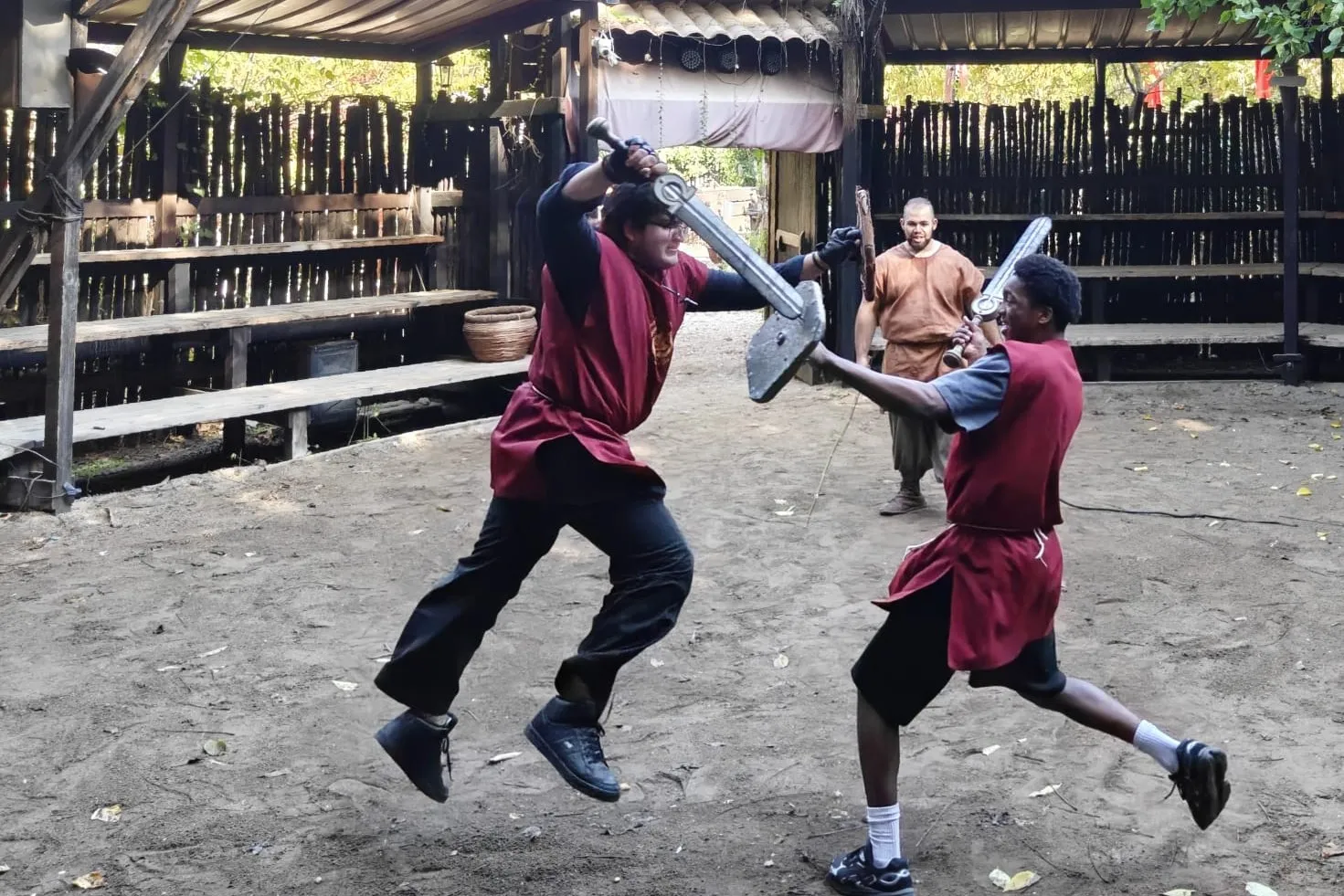
Tuesday began with one of the most interactive experiences of the trip: a visit to a gladiator school. Our instructor introduced us to the different types of gladiators, their training and the conditions in which they lived and fought. We then took part in a demanding training session, practising defensive techniques, dodging weighted bags and learning to fight with wooden swords. The highlight was undoubtedly the opportunity to compete against one another in a small arena, with the opening contest between Kaan and Rico proving particularly entertaining!
We then returned to the city centre to visit the Basilica of Saint Mary Major, before making our way to the Colosseum. Standing inside this extraordinary structure, it was fascinating to consider the scale of the spectacles that once took place there and the thousands of Romans who gathered to watch them. Its remarkable preservation, almost 2,000 years after its construction, is also a testament to the sophistication of Roman engineering. From there, we continued to the Roman Forum, once the political, religious and commercial centre of the city. We were given time to explore the extensive ruins, which provided a real sense of the scale and importance of public life in Ancient Rome.
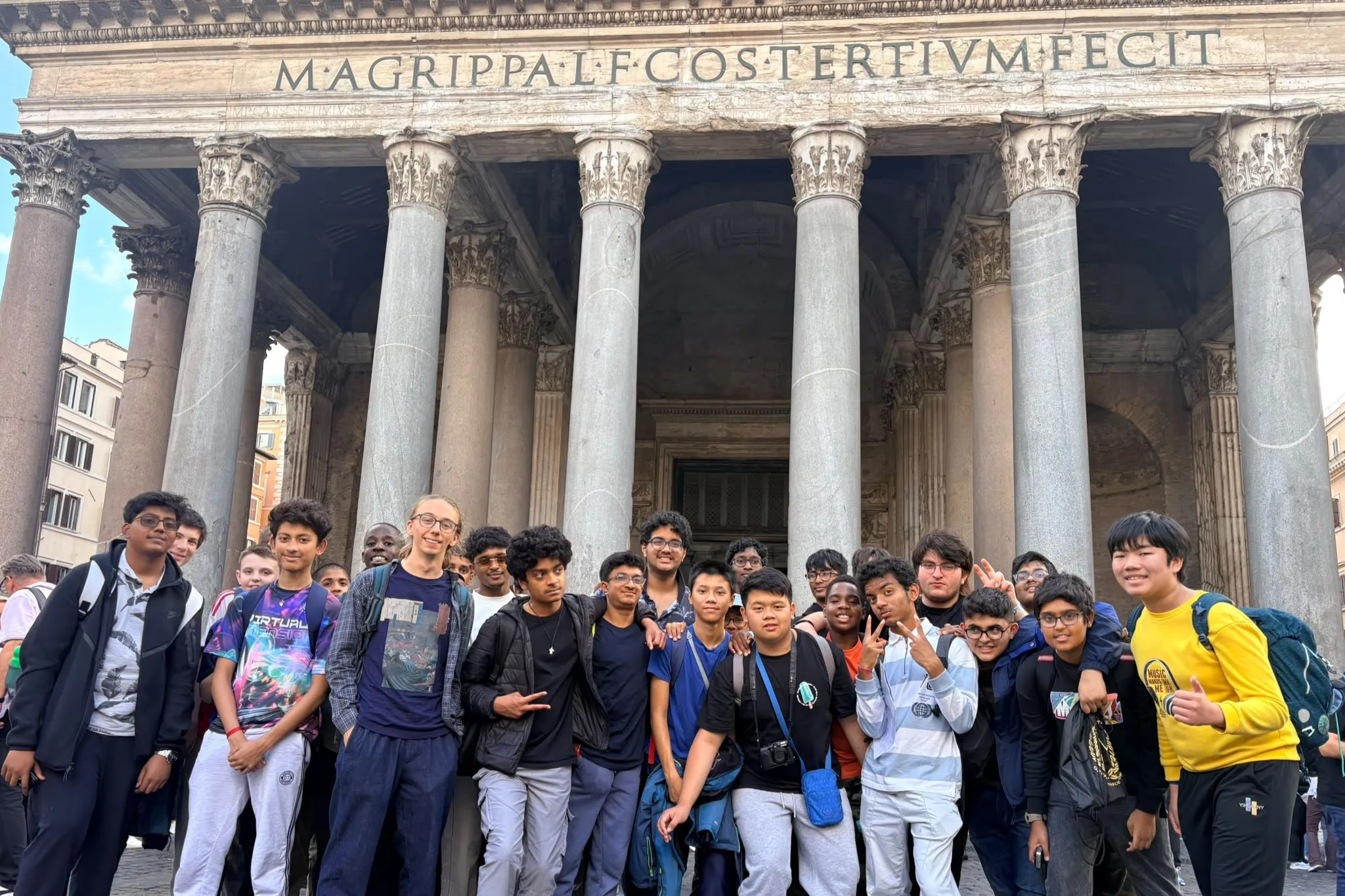
Wednesday took us beyond the city to Ostia Antica, the ancient harbour town that played a vital role in Rome’s trade and economy. The remarkably well-preserved site offered a fascinating insight into everyday Roman life. We explored its brick buildings, intricate mosaics and impressive theatre, gaining a better understanding of how an ordinary Roman town functioned as a busy commercial centre. Returning to Rome in the afternoon, we visited several further landmarks, including the Pantheon and the Column of Marcus Aurelius. We also enjoyed a fascinating talk from Mr Coop about the life and work of Caravaggio, followed by the opportunity to see three of his paintings in person.
The day concluded with a rather different cultural experience: an Italian cookery class, where we were taught to prepare our own pizzas and tiramisu – which, fortunately, we also got to enjoy! On our return to the hotel, we took an evening walk past Castel Sant’Angelo and Vatican City, providing a memorable end to a particularly full day.
Our final morning included visits to the Circus Maximus, the enormous stadium that once hosted chariot races, and the Forum Boarium, Rome’s ancient cattle market, where two remarkably well-preserved temples still stand.
The trip was an enormously rewarding experience, offering a deeper understanding of Roman history, architecture and culture. Seeing these sites in person brought our studies to life in a way that simply cannot be replicated in the classroom.
A huge thank you to Mr Nash, Mr Coop, Ms Amoako-Williams and Mrs Fenby-Betts for organising and accompanying us on such a memorable trip.
Article written by Nilavan (Year 10)